How Much Does It Cost to Build an AI Agent?
TL;DR
- Build budget: $15,000 for the example staff-reviewed booking pilot.
- Time to market: Four to six weeks, assuming access to an existing inbox and reservation API.
- Infrastructure: $150 per month as a planning allowance for the server, database, and AI usage. Support and third-party subscriptions are separate.
- Main cost driver: The work the agent is allowed to do. Drafting a reply, checking live availability, and confirming a booking are three different scopes.
For a focused AI agent that handles one workflow, connects to one existing system, and asks for human approval before taking action, use $15,000 and four to six weeks as an illustrative starting budget for a pilot. That’s the example we’ll price in this guide. A prototype that only drafts replies needs less work. An agent that writes to several live systems, serves different teams, or must meet strict uptime requirements needs a separate estimate.
Budget for the build and monthly operations separately. Model tokens are one line item. The larger decisions are what the agent can access, which actions it can take, and who handles exceptions when it gets stuck.
What are you actually building?
Consider a restaurant that receives booking requests by email. Staff check availability, reply with a time, and update the reservation system once the guest confirms. An AI agent could read the request, pull out the date and party size, check availability through an approved integration, and draft a reply for staff to review.
| First release | What it does | What drives the estimate |
|---|---|---|
| Prototype | Reads sample requests and drafts responses | Prompting, sample data, and a basic review interface |
| Staff-reviewed pilot | Checks real availability and queues replies for approval | Live integration, access controls, evaluation, and a fallback process |
| Agent with booking permissions | Creates or changes eligible reservations | Write permissions, duplicate prevention, recovery, monitoring, and operational support |
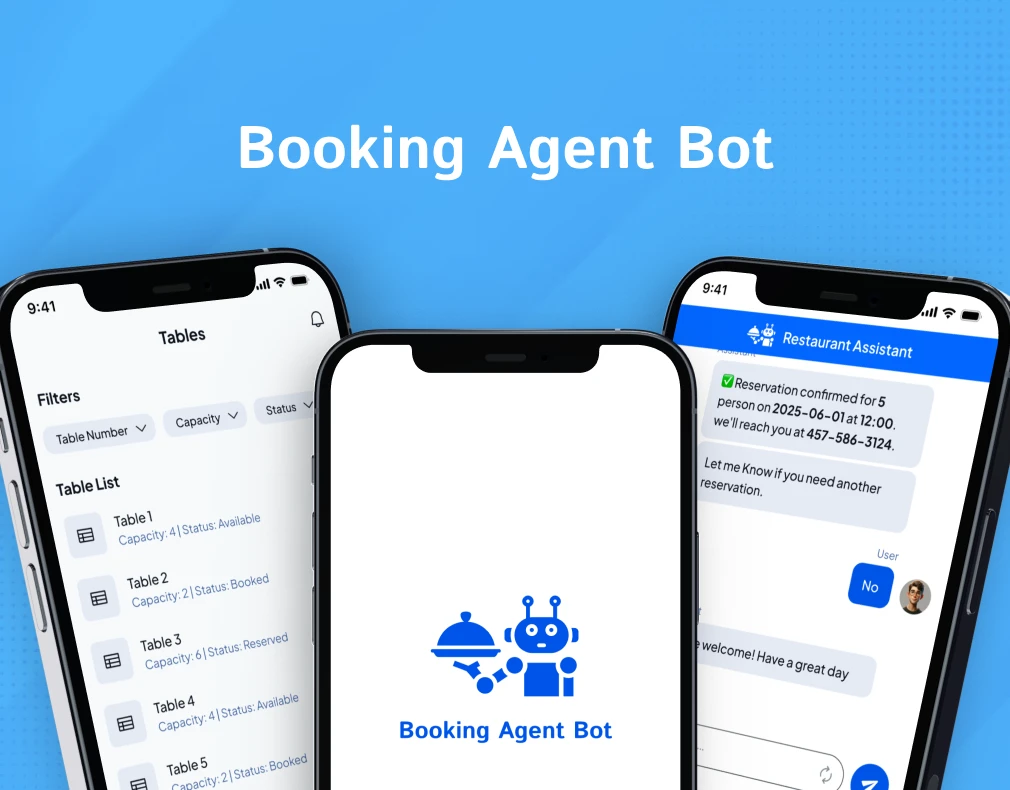
This example is hypothetical. For a real Formics project involving live availability and instant reservation management, see Booking Agent Bot. The project does not supply the costs used in this guide.
When does a workflow need an agent?
Start with the work itself. If guests already use a structured booking form and the same rules apply to every request, a conventional integration may be enough. It can send the date and party size to the reservation system and display the available times. That path can be easier to test because every request has the same fields and follows the same rules.
An agent adds value when requests arrive in free text or need information from more than one place. A guest might write, “Can you fit six of us after the game? Two guests need high chairs.” The system has to interpret the message, recognise what information is missing, and check which details staff need before replying. Some parts of the workflow can still use fixed rules. For example, always pull the opening hours from the store’s maintained schedule and route large parties to a manager.
Describe the decision you want to improve before choosing a model or architecture. If the team spends most of its time retyping request details, start with extracting them. If searching for an available slot consumes more time, prioritise the integration. If unusual requests dominate, a review interface may matter more than a fully automated response. The first estimate should describe which of those jobs the pilot will handle.
What would a $15,000 AI agent pilot include?
Assume one location, one shared inbox, an existing reservation system with an accessible API, and a staff member who can approve drafts. The pilot checks availability and proposes a response. Staff still confirm reservations in their existing system.
| Work | Illustrative one-time budget |
|---|---|
| Map the workflow, exceptions, and approval rules | $2,000 |
| Connect the inbox and reservation availability | $4,000 |
| Build the agent and staff review queue | $4,000 |
| Test real-world scenarios and tune the workflow | $3,000 |
| Deploy, configure alerts, and train staff | $2,000 |
| Example pilot total | $15,000 |
This is a planning example in USD. A quote depends on the actual integration, the data available for testing, and the work needed to fit the agent into the team’s routine. If the reservation system lacks usable API access, investigate that during discovery. Staff might start with a draft-only pilot while the business works out how to provide live availability.
What happens inside each build line item?
Discovery. Map the steps from incoming message to confirmed reservation. Identify the person responsible at each handoff and choose the requests the pilot will handle. A restaurant might start with individual bookings and route private events to staff. The outcome of discovery should be a scope the team can test. An example is “extract the date and party size, check the live schedule, and prepare a response for approval.”
Integrations. Verify access to the inbox and reservation platform before planning the full build. Find out how staff identify a conversation, which availability data the system exposes, and whether there is a safe test environment. Plan what to do if a service times out or sends the same event twice. In the example, the system can queue the request for review while the availability service is offline.
Agent and review interface. Give staff the original message, the proposed reply, and the facts used to draft it. Define which fields staff can edit and how approvals are recorded. The review screen is part of the product. If a staff member has to open several different tools to check a draft, the pilot may save less time than expected.
Evaluation. Assemble a set of representative requests and agree on the expected next step for each. Include routine bookings, ambiguous dates, unsupported requests, and unavailable slots. As the workflow changes, rerun those examples to check whether a fix for one case breaks another. Treat approval rules and the accuracy of availability information as explicit acceptance criteria.
Deployment and handoff. Decide who can enable the workflow, who receives alerts, and how staff switch back to handling messages manually. Document which accounts the business owns and what happens to messages already in the review queue if the agent is paused. The pilot is easier to operate when staff can diagnose routine problems without waiting for a developer.
How long does development take?
A four- to six-week pilot could start with a week to agree on scope, access, and sample cases. The next phase connects the systems and gets one request through the full workflow. The final phase tests exceptions, runs the agent alongside staff, and measures how much review work it creates.
Use realistic cases from the start. A request for “next Friday” may need clarification. A guest might mention a different party size in a follow-up. Availability can change after the agent checks it. A good first release identifies when it should ask a question or hand the request back to staff.
Account access and timely feedback matter to the schedule. Before setting a launch date, agree on who can provide credentials, approve workflow decisions, and review the agent’s responses during the pilot.
A possible four- to six-week pilot schedule
| Phase | Expected output |
|---|---|
| Week 1 | Agreed scope, test cases, access requirements, and ownership of approvals |
| Weeks 2–3 | One real request goes from inbox to a staff-reviewable draft |
| Weeks 4–5 | The workflow handles common exceptions and runs alongside staff on a limited queue |
| Week 6, if needed | Address findings from the trial and complete the handoff |
Access delays can shift the middle of the schedule. If a third-party vendor needs to approve credentials, assign someone to follow up early. Reviewing the agent on sample messages can continue in parallel. Set the live pilot date once the team has confirmed availability data is reliable and staff have time to review the first batch.
How much does an AI agent cost to run?
Your monthly budget depends on the number of tasks, the average cost of each task, and the services the agent uses. For the booking pilot, a $150 monthly infrastructure allowance could cover a $25 app server, a $25 database if the app needs its own review queue or audit history, and a $100 AI usage allowance. Those are planning amounts. Existing inbox and booking subscriptions, integration fees, and ongoing support sit outside that total.
Work out token costs per completed task
Suppose the booking agent processes 10,000 requests per month, with 3,000 billable input tokens and 500 billable output tokens per request across its model calls. That adds up to 30 million input tokens and 5 million output tokens. At GPT-6 Luna’s listed standard rates of $0.10 per million input tokens and $0.50 per million output tokens, the model token charge would be $5.50 per month under those assumptions. OpenAI model pricing
The $100 allowance leaves room for a different model, longer conversations, or more calls per task. Track cost per completed request, since a single booking can require classification, an availability lookup, and a drafted reply. Paid tool calls, voice, and third-party services can add charges beyond text tokens.
Include the work that keeps the agent reliable
Decide who will review failures, update the workflow when booking rules change, and respond when an integration stops working. Track how often staff approve drafts as written, how often they edit them, and how much time review takes. An agent that drafts thousands of replies can still create extra work if staff have to rewrite most of them.
Estimate the first year separately
If the example pilot incurs the full $150 monthly infrastructure allowance for 12 months, the infrastructure budget is $1,800. Add the $15,000 build and the example reaches $16,800 before staff review time, support, or additional subscriptions. If an inbox or booking subscription is already in the operating budget, list it separately so you can see which costs the agent introduces.
If the database allowance does not apply, the example running budget drops to $125 per month. Before removing it, identify where the review queue and approval history will live. An existing help desk might already provide a suitable queue. If it does, integrating with it may save the cost and effort of operating another interface.
It helps to ask for a quiet-month estimate and a busy-month estimate. Some costs, such as a base server plan, may barely move. Requests to a model, outbound messages, and paid tool calls depend on usage. For a seasonal business, include a sample of busy-period requests when testing. The mix of tasks can change as well as the number of tasks.
Measure the cost of the work people still do
During the pilot, sample the time staff spend on requests with and without the agent. Count the whole task, including checking a draft, correcting it, and resolving follow-up messages. If an agent saves two minutes on a typical booking but adds time on large groups, the team can limit the first rollout to routine bookings.
Agree on how you’ll know whether the numbers justify expansion. A restaurant could compare time per handled request, the proportion of replies staff can approve with little editing, and the number of cases routed correctly. Track problems such as an incorrect date or stale availability separately. A faster reply has limited value if it creates a second conversation to fix the booking.
Check how the estimate treats requests that never finish. A timeout, retry, or handoff may still incur model and tool charges. During the trial, record both the number of requests started and the number completed. That gives you a better denominator when comparing different versions of the workflow as usage grows steadily.
What pushes the cost up?
- More integrations. Each system has its own permissions, data formats, and failure cases. Checking availability in one system is a smaller scope than reconciling it across several.
- Actions with real consequences. Confirming reservations, issuing refunds, or updating records adds approval rules, duplicate prevention, and recovery work.
- More users and roles. Multiple locations may need different access, business rules, and reporting. Agree on what each team can see and change.
- Voice or multiple languages. These add testing scenarios and can change the running-cost model.
- Higher reliability requirements. Define response times, support hours, and what should happen when the model or a connected service is unavailable.
What changes when the agent can take action?
A reply-drafting agent gives staff a suggestion. An agent that confirms a reservation changes the booking system. Before giving it that permission, define which reservations qualify, what details must be checked, and what happens if availability changes between the check and the attempted booking. Ask the integration team how it will prevent duplicate bookings if a request is retried.
Work through failure scenarios with a staff member. If the reservation system accepts an update but the confirmation message fails to send, someone needs to know whether the booking exists and how to contact the guest. If the booking update fails, the agent should avoid telling the guest the reservation is confirmed. These cases affect the build budget because the team has to implement and test them.
The same principle applies to support agents that update accounts or sales agents that write to a CRM. Price each new action as a separate scope decision. Let the pilot results establish whether the next action is valuable enough to justify the permissions and recovery work.
How do you get a useful quote?
Bring one workflow to the conversation. Share a few representative requests with sensitive details removed, name the systems staff use today, and describe what a successful handoff looks like. Ask your development team to separate the one-time build, expected monthly usage, and support. The most useful quote also states which actions the agent can take and which still need approval.
For the booking example, a strong brief would say: “Check availability for incoming requests at one location, draft a reply, and let staff approve it. We’ll measure review time and how many drafts can be sent with minimal changes.” That gives the team a concrete job to price and a way to judge the pilot.
Why work with Formics to build an AI agent?
Formics scopes the workflow with the people who will use it. We start by identifying the work that repeats, the information people need to make a decision, and the steps that should stay under human review. This helps define a first release and gives the team a way to decide whether an agent or a simpler automation fits the task.
We design the work around your existing tools. A pilot might read approved documents, connect to a CRM, or use a reservation API. During discovery we review what each system exposes and what the agent needs to access. Keeping the first integration focused makes it easier to investigate a failure. The people using the agent should be able to see which system it checked and where to take over.
We design the interface for the person reviewing the work. An approval flow is only useful if a reviewer can see what the agent is proposing and check the underlying facts quickly. For a booking team, that means seeing the guest request and offered slot in the same workflow. Our Booking Agent Bot case study shows how Formics approached a related product challenge: presenting live availability and supporting reservation management.
We plan evaluation as part of delivery. Before a pilot goes live, agree on representative requests, expected results, and failure scenarios. After launch, review the cases where the agent struggled alongside completed tasks, response time, and operating costs. That evidence helps decide whether to adjust the workflow, widen its scope, or keep certain decisions with staff.
See the full AI agent development service for the discovery, integration, and evaluation work Formics offers.
Frequently asked questions
Can I build a cheaper prototype before paying for a pilot?
Yes. If the question is whether the agent can interpret messages and draft useful replies, start with sample requests and a simple review screen. Add live data when you need to see how the workflow performs in the business. Confirm what parts of the prototype the team expects to reuse and which pieces need to be rebuilt for a production release.
Do I need a separate database for every AI agent?
A separate database is useful when the agent needs its own task records, approval history, or information that cannot live in an existing platform. If the business already has a help desk that stores the necessary information, use that as a starting point. The decision depends on what staff need to retrieve and how long the business must keep it.
Does a more expensive model always make a better agent?
Compare models on examples from the actual workflow. A model that is good at pulling dates and party sizes from short messages may be enough for most requests. A more capable model might help when staff face long threads or less predictable questions. Measure the quality difference, latency, and cost per finished task before switching.
What should I ask for before I approve a quote?
Ask for the scope, the estimated work by phase, the operating assumptions, and the conditions that would change the price. Confirm which integrations are included and whether the estimate covers the review interface, testing, deployment, and training. Give ongoing support its own line so you know who monitors the workflow after launch.
Conclusion
For the booking example, $15,000 and four to six weeks gives a starting point for one staff-reviewed workflow. The $150 monthly infrastructure allowance sits alongside the build, with support, staff review time, and any third-party subscriptions accounted for separately. Your estimate will depend on the job, the systems the agent uses, and whether it can act on its own.
Start with one task you can measure. In this example, the task is checking availability and preparing a reply that staff can approve quickly. Once you know how reliably that works and what it costs per completed request, you can decide whether giving the agent more responsibility pays off.
Share your workflow with Formics to discuss what a first pilot would include.